
Letter to Stakeholders — January 2026
To clients and partners,
2025
Quick look back: 2025 was a good year. We handled record volumes, Black Friday was our quietest ever — no incidents, no firefighting. The platform worked. That’s what we want from a mature SaaS, and we got it.
It was also, honestly, a pre-AI year. There was a lot of AI talk in 2024-2025, but most of it was hype. The tools were impressive in demos but not reliable enough for real work. We experimented internally, but we didn’t push it to clients.
That’s changing now.
What’s different in 2026
Something real happened in the last few months. In programming — which is where I can speak with confidence — it now rarely makes sense to write code by hand. The tools crossed a line where they’re faster and often better than doing it manually.
We’re already living this. Development that took days takes hours. Features that would have sat in the backlog for months are shipping in weeks.
This is good. But it also creates a problem I’ll get to.
What you’ll see from us
Two directions, depending on how much you want to engage with AI yourself.
For power users — if you’re already using ChatGPT, Claude, or similar tools — we’re building direct integrations that let your AI assistant connect to CourierManager. This means you can query data or trigger operations through conversation. You control how much access to give.
For everyone else, we’re putting AI directly into the platform. Better support chat with AI assistance. A ticketing system that can handle common issues without waiting for a human. No extra subscriptions, no setup — it’s just there.
One thing we’re not compromising on: your data stays separate from AI by default. You have to explicitly grant access — through settings, API permissions, whatever. We’re aggressive about using AI where it helps us. We’re careful about what it can see.
The problem we didn’t expect
Development got faster. Everything else stayed the same.
Building a feature has two parts: writing the code, and figuring out what to build — understanding the problem, defining requirements, going back and forth until the spec is actually right. Call it PM work, or spec work, or just “the conversations.”
A year ago this was roughly 50/50. Half the time coding, half the time on everything else.
Now coding takes a fraction of what it used to. But PM work? Same as always. Still needs human conversation, still needs iteration, still takes time. What was 50% of the effort is becoming 80%.
This is our main challenge for the first half of 2026.
What we’re doing about it
We’re building something internally called ProblemManager. The idea: use AI to help with the requirements process itself. Capture problems as they’re described, ask clarifying questions, surface contradictions before they become wasted work. We’re targeting Q1 for a first version.
But this isn’t only our problem to solve. You know your operations. If you’re already using AI tools, think about how they might help clarify what you need before it reaches us. The clearer the requirements, the faster and cheaper the result.
How we’re changing what we charge
You know we don’t like charging for development. We’re a SaaS, not an agency. When we do charge, it’s mostly a prioritization tool — put a price on something and suddenly “we’re not sure we need this” conversations resolve themselves.
In 2025 we absorbed most dev costs, especially for clients we work with closely. Just seemed simpler.
That’s changing. We’re applying dev charges consistently now, for everyone.
Here’s why we’re doing it this way: if PM work is now the real cost, everyone needs to feel that cost. Otherwise there’s no incentive to fix it. We could hide our efficiency gains and just do “more of the same” — but that would be dishonest, and it would leave us solving the coordination problem alone.
We’d rather be transparent and have everyone aligned on making requirements cheaper.
To partners
The same efficiency changes affect you. If you’re building integrations or extending CM for your clients, the tools that speed up our work can speed up yours. Happy to share what’s working for us. The AI integrations will be documented for partner use.
Q1 2026
What’s coming:
- Direct AI assistant integrations for ChatGPT and Claude
- AI-powered support chat
- Smarter ticketing system
- ProblemManager beta
If you’re working with AI in your operations and want to talk about integration options — reach out. Not a sales thing. I’m curious what’s working for you.
Radu Floricică Founder, CourierManager
Recent news

As e-commerce continues to reshape retail landscapes worldwide, courier services have become an essential link connecting businesses with consumers. With the significant rise in online shopping, delivery companies have experienced substantial growth in demand for their services. According to IBIS World, the courier and local delivery services market in the US has grown at an […]
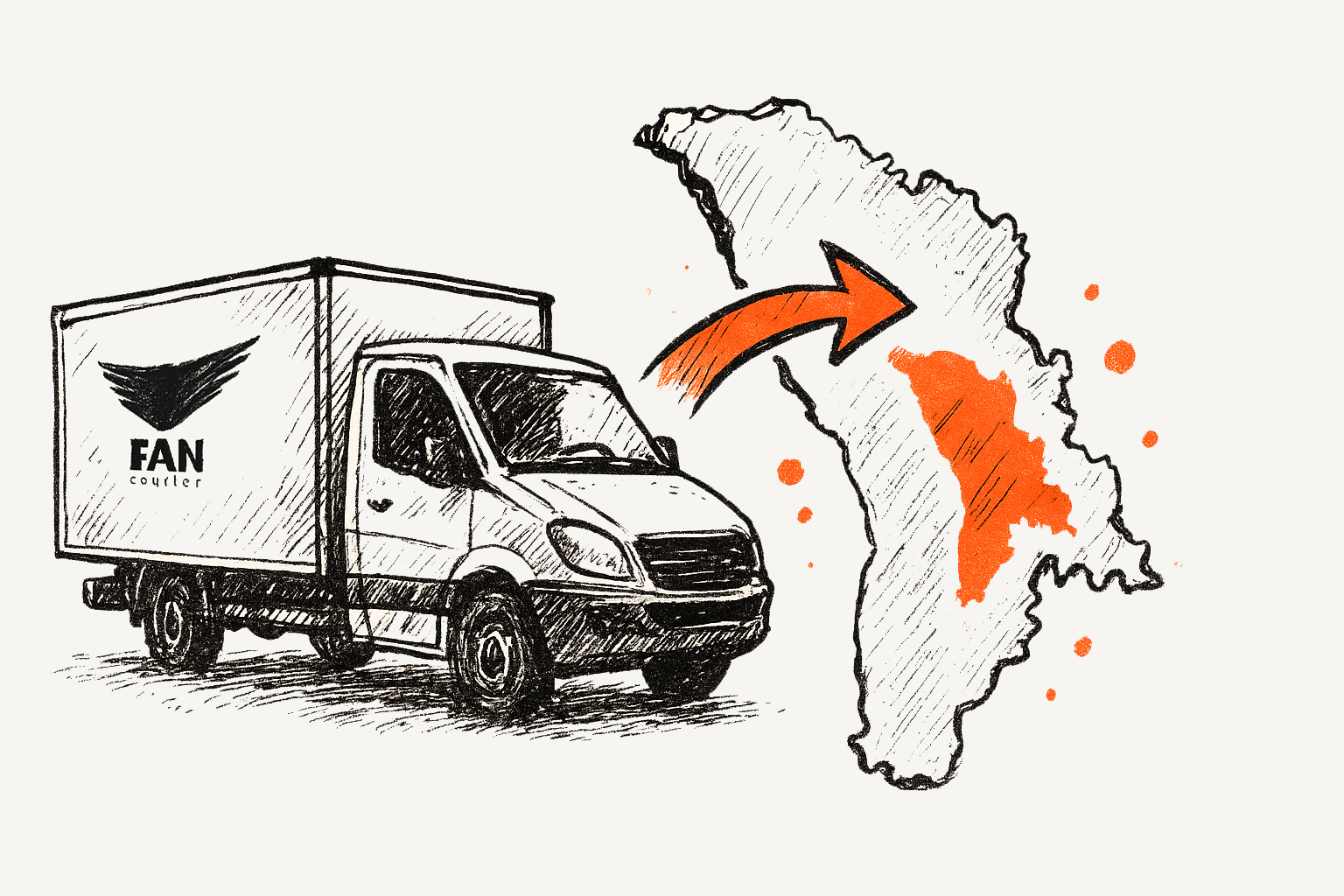
FAN Courier, an established name in courier services, is extending its operations into Moldova, powered by the comprehensive CourierManager software platform.
In today’s connected economy, the courier industry plays a critical role in linking businesses and consumers across borders.